

In today’s rapidly evolving digital economy, organizations are under immense pressure to improve efficiency, reduce operational costs, and deliver faster, data-driven decisions. Traditional business systems—often fragmented across departments—are no longer sufficient to support modern operational demands.
To remain competitive, enterprises must adopt integrated digital ecosystems that unify data, automate workflows, and empower employees with self-service tools. This is precisely where the Microsoft Power Platform emerges as a game-changing solution.
The Microsoft Power Platform is a low-code/no-code suite that enables organizations to analyze data, automate processes, build custom applications, and deploy AI-powered assistants—all within a single connected environment.
At FanisiTech Limited, we recognize the Power Platform as a cornerstone of modern digital transformation strategies, particularly for institutions seeking to streamline operations, improve transparency, and enhance productivity across departments.
This article provides a comprehensive, SEO-optimized exploration of how the Microsoft Power Platform can be strategically deployed to transform organizational operations across finance, HR, procurement, operations, and management functions.
Understanding Microsoft Power Platform: A Unified Digital Ecosystem
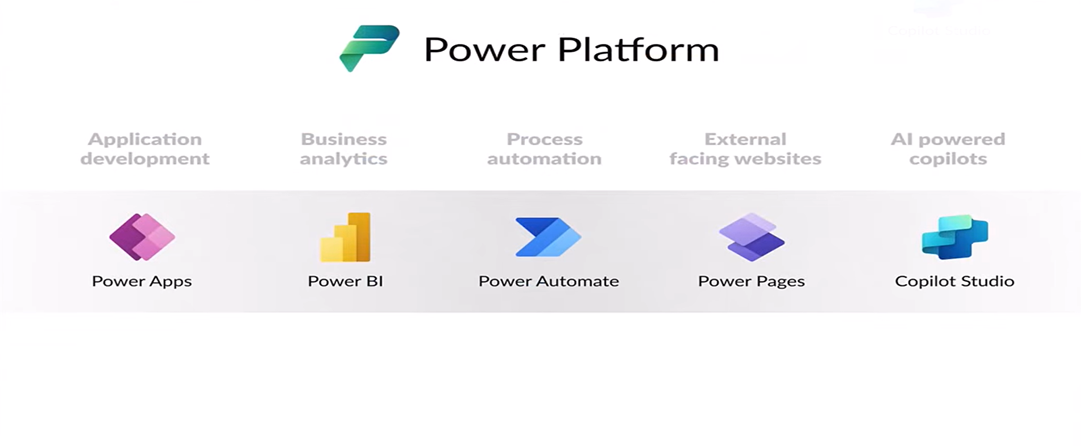
The Microsoft Power Platform is not a single product but an integrated suite of business intelligence and automation tools designed to work together seamlessly.
It consists of four core components:
- Power BI – Data analytics and visualization
- Power Apps – Custom application development
- Power Automate – Workflow automation
- Microsoft Copilot Studio – AI-powered conversational automation
Together, these tools form a unified digital platform that connects data, processes, and people.
Why the Power Platform Matters for Modern Organizations
Unlike traditional ERP or standalone systems, the Power Platform:
- Eliminates departmental silos
- Enables real-time data sharing
- Reduces dependency on complex coding
- Accelerates digital solution delivery
- Enhances organizational agility
It acts as a digital bridge between business users and IT teams, enabling faster innovation without compromising governance or security.
The Shift from Traditional Systems to Intelligent Digital Operations
Many organizations still rely on disconnected systems for core operations such as HR, finance, procurement, and customer service. These fragmented environments create inefficiencies that slow down business performance.
Common Challenges in Traditional Systems
- Duplicate data entry across departments
- Delayed reporting and decision-making
- Lack of real-time visibility into operations
- High dependency on IT for simple system changes
- Inefficient manual workflows
The Microsoft Power Platform addresses these challenges by introducing a connected, automated, and intelligence-driven operational model.
When integrated with enterprise systems such as Microsoft Dynamics 365, Microsoft 365, and Azure, the Power Platform becomes the backbone of a fully digital enterprise.
Enhancing Decision-Making with Power BI: Turning Data into Strategic Insight
In modern organizations, data is one of the most valuable assets. However, raw data is meaningless without proper analysis and visualization.
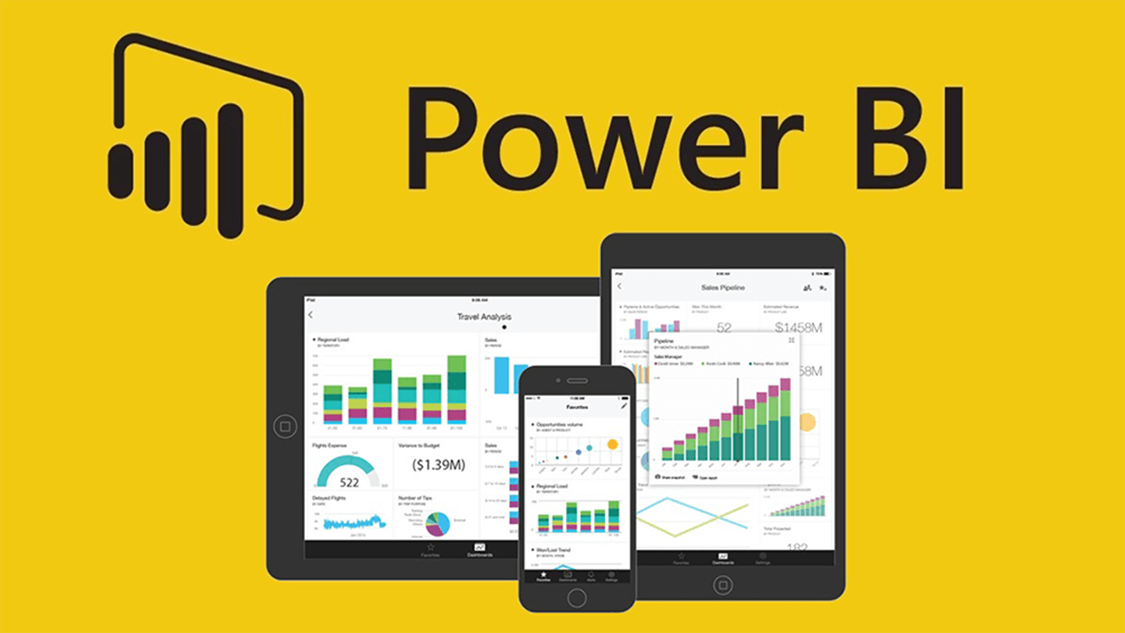
Power BI transforms raw organizational data into meaningful, interactive, and real-time dashboards that support decision-making at all levels.
How Power BI Transforms Organizational Reporting
- Power BI enables organizations to:
Consolidate data from multiple sources into a single dashboard
Generate real-time performance insights
Monitor KPIs across departments
Predict future trends using AI-powered analytics
Enable self-service reporting for business users
Departmental Impact of Power BI
1. Finance Department
- Budget monitoring and variance analysis
- Revenue tracking and forecasting
- Expense analysis and financial consolidation
2. Operations Department
- Real-time performance monitoring
- Resource utilization tracking
- Workflow efficiency analysis
3. Executive Management
- Strategic dashboards for decision-making
- Organizational performance indicators
- Predictive analytics for planning
By eliminating static reports and introducing dynamic dashboards, Power BI enables organizations to transition from reactive decision-making to proactive strategy formulation.
Automating Business Processes with Power Automate: Eliminating Manual Inefficiencies
Manual processes are one of the leading causes of inefficiency in organizations. Tasks such as approvals, notifications, and data transfers often consume valuable time and introduce human error.
Power Automate provides a powerful solution by enabling organizations to automate repetitive workflows across systems and applications.
Key Features of Power Automate
- Automated approval workflows (finance, HR, procurement)
- Cross-application integration
- Scheduled data synchronization
- Automated alerts and notifications
- Robotic process automation (RPA)
Real-World Applications Across Departments
Human Resource Management
- Automated onboarding and offboarding
- Leave approval workflows
- Employee record updates
Finance Department
- Invoice approval automation
- Payment reminders and reconciliation
- Expense approval workflows
Procurement Department
- Purchase requisition approvals
- Supplier communication automation
- Inventory update workflows
Business Impact
By automating repetitive tasks, organizations achieve:
- Faster processing times
- Reduced operational costs
- Improved compliance
- Greater process consistency
Power Automate ensures that business processes run efficiently, consistently, and without unnecessary human intervention.
Building Custom Business Applications with Power Apps
Traditional application development is often expensive, time-consuming, and heavily dependent on IT resources.
Power Apps revolutionizes this by enabling organizations to build custom business applications using a low-code approach.
What Makes Power Apps Powerful?
- Rapid application development
- Drag-and-drop interface
- Seamless integration with existing data sources
- Mobile and web application support
- Enterprise-grade security and governance
Examples of Business Applications Built with Power Apps
- Asset management systems
- Field service tracking applications
- Employee performance management tools
- Customer onboarding platforms
- Internal service request systems
Departmental Benefits
Operations
- Real-time tracking of field activities
- Asset lifecycle management
Human Resources
- Employee self-service portals
- Recruitment tracking systems
Sales Teams
- Mobile CRM applications
- Lead tracking and reporting tools
Power Apps empowers organizations to digitize manual processes quickly without waiting for lengthy development cycles.
Intelligent Automation with Microsoft Copilot Studio
As organizations evolve, the need for intelligent, conversational interfaces becomes increasingly important.
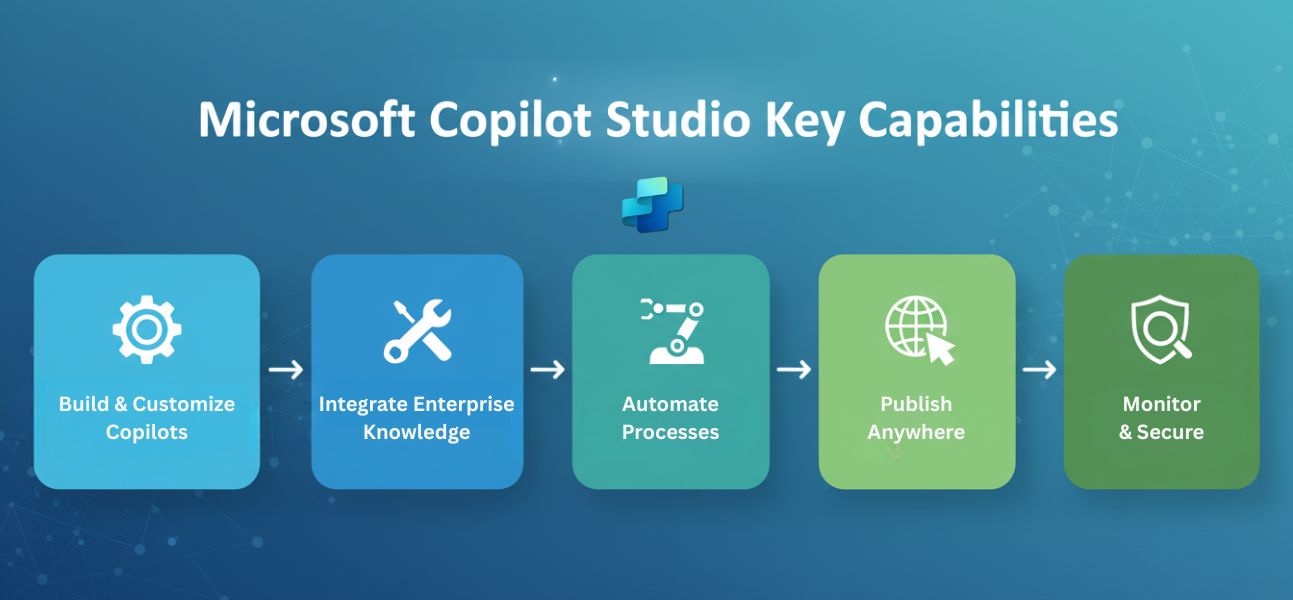
Microsoft Copilot Studio enables businesses to create AI-powered chatbots and virtual assistants that enhance communication and service delivery.
Key Capabilities
- Natural language interaction with users
- Automated customer support responses
- Integration with organizational databases
- Multi-channel deployment (web, Teams, mobile apps)
Practical Use Cases
- HR chatbots answering employee queries
- IT helpdesk automation
- Customer service assistants
- Internal policy guidance tools
Business Impact
- Reduced workload on support teams
- Faster response times
- Improved user satisfaction
- 24/7 availability of services
Copilot Studio introduces a new layer of intelligent automation that enhances both internal and external user experiences.
Seamless Integration: Building a Connected Digital Enterprise
One of the most powerful advantages of the Microsoft Power Platform is its ability to integrate seamlessly with other Microsoft ecosystems.
When combined with Microsoft 365, Azure, and Dynamics 365, the Power Platform creates a fully connected digital environment where:
- Data flows seamlessly across departments
- Processes are interconnected
- Systems communicate in real time
- Decision-making is unified and data-driven
Example of Integrated Workflow
- A purchase request is created in Power Apps
- Approval workflow is triggered via Power Automate
- Financial data is updated in real time
- Power BI dashboards reflect updated expenditure
- Notifications are sent automatically to stakeholders
This creates a fully automated and transparent operational ecosystem.
Organizational Benefits of Microsoft Power Platform
Organizations that adopt the Power Platform experience transformative benefits:
1. Operational Efficiency
Automation eliminates repetitive manual tasks, allowing employees to focus on strategic activities.
2. Improved Decision-Making
Real-time analytics enable faster and more accurate business decisions.
3. Cost Reduction
Low-code development reduces reliance on expensive custom software solutions.
4. Enhanced Collaboration
Integrated systems improve communication across departments.
5. Scalability
Solutions built on the Power Platform can scale with organizational growth.
FanisiTech Perspective: Driving Digital Transformation in Organizations
At FanisiTech Limited, we specialize in helping organizations leverage the Microsoft ecosystem to achieve digital transformation.
Our approach focuses on:
- Strategic implementation of Microsoft Power Platform
- Integration with enterprise systems
- Custom solution development using Power Apps
- Advanced analytics using Power BI
- Workflow automation using Power Automate
We believe that true digital transformation is not just about adopting technology—it is about reengineering how organizations operate, collaborate, and make decisions.
Challenges in Adoption and How to Overcome Them
While the Power Platform offers significant advantages, successful implementation requires careful planning.
Common Challenges
- Lack of user training and adoption
- Poor data governance practices
- Integration complexity with legacy systems
- Resistance to change within organizations
Recommended Approach
- Structured training programs
- Strong governance frameworks
- Phased implementation strategy
- Continuous user engagement and support
With the right implementation partner, these challenges can be effectively managed.
The Future of Business is Built on the Power Platform
The Microsoft Power Platform represents a fundamental shift in how organizations build, manage, and optimize their operations.
By combining data analytics, automation, application development, and AI-powered communication, it enables organizations to operate with unprecedented efficiency and intelligence.
For institutions seeking to streamline operations, improve decision-making, and accelerate digital transformation, the Power Platform is not just a tool—it is a strategic foundation for the future.
At FanisiTech Limited, we are committed to helping organizations unlock this potential and build intelligent, scalable, and future-ready digital ecosystems.
We work closely with your organization to ensure a successful ERP journey—from strategy to execution.
To find us, visit our website https://fanisitech.com/, call our offices (+254743313103), visit our main office [Office Number 718, 7th Floor, KU PLAZA, Haile Sallassie Avenue, Nairobi CBD], or email us on info@fanisitech.com to schedule a FREE DEMO.
The opportunity is clear. The technology is ready.
The next move is yours.
Latest Comments
No comments yet for this post. Be the first to comment
Comment on the blog "Unlocking Digital Transformation with Microsoft Power Platform: A …"