

Picture this: a promising lead reaches out to your business on a Monday afternoon. Your sales rep responds quickly, has a great conversation, and the prospect sounds genuinely interested. They ask for a proposal by the end of the week. Life gets busy. Friday comes. The proposal never goes out.
By the following Monday, the prospect has signed with a competitor.
This scenario plays out thousands of times every day across businesses of every size and industry — from a small retail shop in Nairobi to a mid-sized logistics firm in Dubai, to a growing SaaS company in London or Toronto. The culprit is almost never a bad product or a poor salesperson. The culprit is a broken, manual, or non-existent system for managing customer relationships.
That is where a Customer Relationship Management (CRM) system changes everything.
This article explores how CRM transforms sales performance — from capturing the very first inquiry to sealing the deal and nurturing long-term loyalty. Whether you are a business owner, a sales manager, or an executive evaluating tools for your team, this is the definitive guide to understanding why CRM is not just a software purchase — it is a strategic investment in your revenue engine.
What Is a CRM System?
A Customer Relationship Management (CRM) system is a centralized platform that helps businesses manage all interactions with current and potential customers. It stores contact information, tracks communication history, monitors deals in the pipeline, automates repetitive tasks, and generates insights to help sales and support teams act at the right moment.
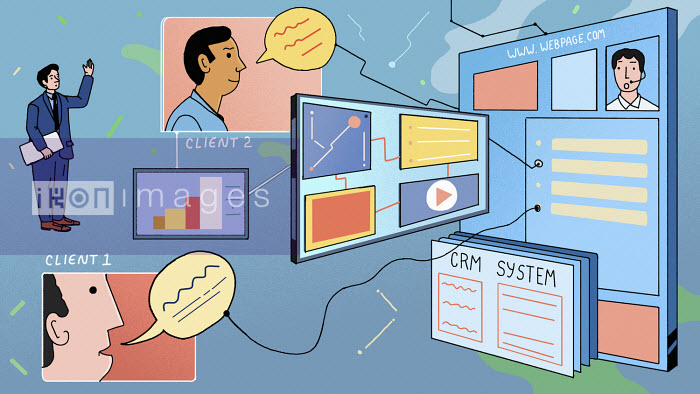
Modern CRM platforms — such as Microsoft Dynamics 365, Salesforce, HubSpot, and Zoho CRM — go far beyond a digital contact book. They integrate with email, phone systems, social media, WhatsApp, e-commerce platforms, and ERP systems to give every team member a complete, real-time view of every customer.
In short, a CRM ensures that no lead falls through the cracks and no relationship is left unattended.
The Hidden Cost of Not Having a CRM
Before exploring what CRM does for your business, it is worth understanding what the absence of one costs you — because the price is far higher than most businesses realize.
Leads Disappear Into Spreadsheets and Inboxes
Without a CRM, lead information lives in scattered places: a shared Google Sheet, individual email inboxes, WhatsApp messages, sticky notes on desks, or the memory of a single salesperson. When that salesperson is on leave, sick, or leaves the company, that knowledge walks out the door with them.
Studies consistently show that businesses without a structured follow-up system lose between 40% and 80% of their leads due to poor or no follow-up. That is not just a pipeline problem — it is revenue walking away.
Follow-Up Timing Is Everything — and Manual Systems Miss It
The research on lead response time is unambiguous: the probability of successfully contacting a lead drops by ten times if you wait longer than five minutes to respond compared to responding within the first minute. Without automation, most businesses cannot come close to this standard consistently.
A CRM with automated workflows can trigger an instant acknowledgment email, assign the lead to the right rep, and schedule a follow-up reminder — all within seconds of the inquiry landing.
No Visibility Into the Sales Pipeline
Without a CRM, sales managers have no reliable picture of where deals stand. They rely on verbal updates in team meetings or manually compiled reports that are already outdated by the time they are presented. This lack of visibility makes it impossible to forecast revenue accurately or to intervene before a deal goes cold.
Customer Experience Is Inconsistent
When customers interact with different team members and have to repeat themselves every time, frustration builds. A CRM gives every agent and salesperson access to the full history of the customer relationship — so every interaction feels informed, personal, and professional.
How CRM Directly Drives Sales Growth
Never Miss a Follow-Up Again
The most immediate and measurable impact of a CRM is the elimination of missed follow-ups. CRM systems allow sales teams to set automated reminders, schedule calls, and trigger follow-up emails based on specific conditions — for example, if a prospect has not responded in three days, the system automatically sends a gentle check-in email and alerts the sales rep.
This turns follow-up from a discipline that relies on individual effort and memory into a systematic, automated process that runs reliably regardless of how busy the team is.
For businesses managing hundreds or thousands of leads simultaneously — common in sectors like financial services, real estate, telecommunications, and e-commerce — this automation is the difference between a 20% and a 60% contact rate.
A Clear, Actionable Sales Pipeline
CRM platforms visualize your entire sales pipeline in one place. Sales reps can see every deal, its current stage, the value attached to it, the next action required, and the probability of closing. Managers can see where deals are stalling, which reps are performing, and where bottlenecks are forming.
This visibility allows for intelligent coaching, timely intervention, and accurate revenue forecasting. Instead of reactive management — responding to crises after they happen — CRM enables proactive management, where problems are spotted and resolved before they cost the business a deal.
Lead Scoring: Focus on the Hottest Opportunities
Not all leads are created equal. A CRM with lead scoring capability assigns a numerical value to each lead based on their behavior and profile — how many times they have visited your website, whether they have opened your emails, the size of their organization, their industry, and their level of engagement with your content.
This allows sales reps to prioritize their time on the leads most likely to convert, rather than spending equal effort on a prospect who opened one email eighteen months ago and someone who has just downloaded your product brochure and requested a demo.
For businesses in competitive markets — where sales cycles are long and resources are limited — lead prioritization can meaningfully increase conversion rates and shorten the time to close.
Automation That Frees Salespeople to Sell
The average salesperson spends only 34% of their time actually selling. The rest goes to administrative tasks: updating spreadsheets, writing repetitive emails, scheduling meetings, generating reports, and chasing approvals.
A well-configured CRM automates the bulk of these tasks. Email templates are sent automatically at the right stage. Meeting links are generated and shared instantly. Deal records are updated when emails are sent or calls are logged. Reports are generated with a click.
This shift allows sales teams to focus their energy where it matters most: building relationships, understanding customer needs, and closing deals.
Integration With Communication Channels
Modern businesses communicate with customers across a wide range of channels — phone, email, WhatsApp, live chat, social media, and self-service portals. Without integration, every channel creates a silo.
An integrated CRM pulls all of these touchpoints into a single timeline for each contact. When a customer calls your support line after having sent a WhatsApp message and an email, your agent can see all three interactions immediately — and respond with full context, without asking the customer to repeat themselves.
For businesses using platforms like Microsoft Dynamics 365, integration extends further — connecting CRM with ERP systems, accounting tools, IP telephone systems, and mobile applications to create a truly unified operational view.
Data-Driven Decision Making
One of the most underappreciated benefits of CRM is the quality of data it generates over time. With every interaction logged, every deal tracked, and every outcome recorded, businesses build a rich dataset that reveals patterns invisible to the naked eye.
Which lead sources produce the highest-value customers? What is the average length of your sales cycle by industry? Which product combinations are most commonly sold together? At what stage do deals most often stall — and why?
These insights allow sales leaders to refine their strategy continuously, allocate marketing budget more intelligently, and coach their teams based on evidence rather than intuition.
CRM Across Different Business Contexts
CRM is not a one-size-fits-all tool, and its impact manifests differently depending on the nature of the business.
Small and Medium Enterprises (SMEs)
For SMEs, the most transformative benefit is structure. CRM brings order to what is often a chaotic mix of manual processes, personal relationships, and ad hoc follow-up. It allows a team of five to manage a pipeline of five hundred leads without losing the personal touch that small businesses pride themselves on.
Enterprise and Corporate Organizations
At the enterprise level, CRM drives value through integration, compliance, and analytics. Large organizations need their CRM to connect seamlessly with finance systems, HR platforms, customer portals, and communication infrastructure. They also need robust access controls, audit trails, and reporting capabilities to meet governance and compliance requirements.
Government Agencies and Public Sector Institutions
Public institutions — regulatory authorities, revenue agencies, utilities, and county or state governments — are increasingly adopting CRM to manage citizen interactions. When citizens can log requests, track progress, and receive timely updates through a structured system, service delivery improves and trust in public institutions grows.
Financial Services, SACCOs, and Insurance
In highly regulated sectors, CRM helps institutions maintain complete records of all customer interactions, manage compliance requirements, automate product renewals and policy reminders, and deliver personalized service at scale. The ability to track customer lifetime value and segment clients for targeted outreach is particularly powerful in these industries.
Key Features to Look for in a CRM
When evaluating a CRM system for your business, the following capabilities are essential.
Contact and Account Management
A comprehensive, searchable database of all your customers and prospects, with full interaction history attached to every record. This ensures that any team member picking up a conversation has the full context they need, regardless of who handled it previously.
Pipeline and Opportunity Management
Visual deal tracking across stages, with customizable sales processes tailored to your specific business model. A good pipeline view tells you not just where deals are, but how long they have been there — so you can act before they go cold.
Task and Activity Automation
Automated reminders, email sequences, and workflow triggers that keep your team on track without manual effort. Automation should handle the routine so your people can focus on the relational.
Reporting and Dashboards
Real-time visibility into sales performance, pipeline health, team productivity, and revenue forecasts. Reports should be accessible without needing a data analyst — clean dashboards that any manager can read and act on immediately.
Multi-Channel Integration
Connectivity with email, phone, WhatsApp, social media, and your existing business systems such as ERP and accounting platforms. Every channel your customer uses should feed into a single, unified customer record.
Mobile Access
A mobile application that allows sales reps to update deals, log calls, and access customer information from the field. Sales does not happen only at a desk — your CRM should not be confined to one either.
Security and User Permissions
Role-based access controls to ensure sensitive customer data is protected and team members see only what is relevant to their role. Enterprise-grade security is non-negotiable, particularly in regulated industries.
Scalability
A platform that can grow with your business, adding users, modules, and integrations as your needs evolve. The CRM you choose today should still serve you well when your team doubles in size.
Choosing the Right CRM Partner
Buying a CRM license is the easiest part. The real work — and the real value — lies in how the system is configured, integrated, and adopted within your organization.
A poorly implemented CRM is arguably worse than no CRM at all: it creates extra work, generates unreliable data, and breeds resistance from the teams that are supposed to use it.
Choosing the right implementation partner is therefore as important as choosing the right platform. Look for a partner who takes the time to understand your specific business processes, customizes the system to fit your workflows rather than forcing your workflows to fit the system, invests in training and change management, and provides ongoing support after go-live.
At FanisiTech Limited, we specialize in end-to-end CRM implementation — from requirements gathering and system design through to configuration, integration, training, and post-deployment support. We work with businesses across multiple sectors and geographies to deliver CRM solutions that are not just installed, but truly adopted and delivering measurable results.
The ROI of CRM: What the Numbers Say
For businesses still weighing the investment, the numbers make a compelling case.
- Businesses using CRM report an average sales increase of 29%, according to Salesforce research.
- CRM can improve sales forecast accuracy by up to 42%, enabling better resource planning.
- Sales productivity improves by an average of 34% when teams move from manual processes to a CRM.
- Customer retention rates improve by 27% when businesses use CRM to actively manage post-sale relationships.
- For every dollar invested in CRM, businesses report an average return of $8.71, according to Nucleus Research.
These are not marginal gains. They represent the kind of step-change in performance that transforms a business's competitive position.
Getting Started: A Practical Roadmap
If you are ready to explore CRM for your business, here is a practical starting point.
Step 1: Audit Your Current Process
Map out how leads currently enter your business, how they are followed up, and how deals are tracked. Identify the specific gaps where opportunities are being lost. You cannot fix what you have not first clearly seen.
Step 2: Define Your Requirements
What channels do your customers use? How many users will need access? What systems does the CRM need to integrate with? What reports does your leadership team need? Clear requirements lead to better platform selection and a smoother implementation.
Step 3: Evaluate Platforms
Shortlist two or three platforms based on your requirements, budget, and technical environment. Request demos and ask specifically about the implementation process — not just the features. A platform is only as good as its real-world deployment.
Step 4: Choose an Implementation Partner
Select a partner with proven experience in your sector, a structured implementation methodology, and a clear approach to training and support. References from similar businesses are a valuable indicator of what to expect.
Step 5: Plan for Adoption
The biggest risk in any CRM project is low user adoption. Invest in training, communicate the benefits clearly to your team, and involve end users in the configuration process so the system reflects how they actually work. A CRM that no one uses delivers no value.
The System Behind Every Closed Deal
Every closed deal is the result of a series of interactions, decisions, and timely actions. Behind the best-performing sales teams in the world is a system that makes those interactions consistent, those decisions informed, and those actions timely — regardless of who is on the team or how busy the day is.
A CRM is that system.

From the first inquiry to the signed contract and the long-term relationship that follows, CRM ensures that nothing slips through the cracks, every opportunity is pursued with the right information, and every customer feels known and valued.
The businesses that grow fastest are not always those with the best product or the biggest marketing budget. They are the ones with the best systems — systems that turn missed follow-ups into closed deals, and one-time buyers into lifelong customers.
At FanisiTech Limited, we are committed to helping organizations unlock this potential and build intelligent, scalable, and future-ready digital ecosystems.
We work closely with your organization to ensure a successful CRM journey—from strategy to execution.
Ready to transform your sales process with a CRM solution built for your business? Contact FanisiTech Limited today for a consultation and discover how we can help you design, implement, and maximize a CRM that drives real, measurable growth.
To find us, visit our website https://fanisitech.com/, call our offices (+254743313103), visit our main office [Office Number 718, 7th Floor, KU PLAZA, Haile Sallassie Avenue, Nairobi CBD], or email us on info@fanisitech.com to schedule a FREE DEMO.
The opportunity is clear. The technology is ready.
The next move is yours.
Latest Comments
No comments yet for this post. Be the first to comment
Comment on the blog "From Missed Follow-Ups to Closed Deals: How CRM …"